



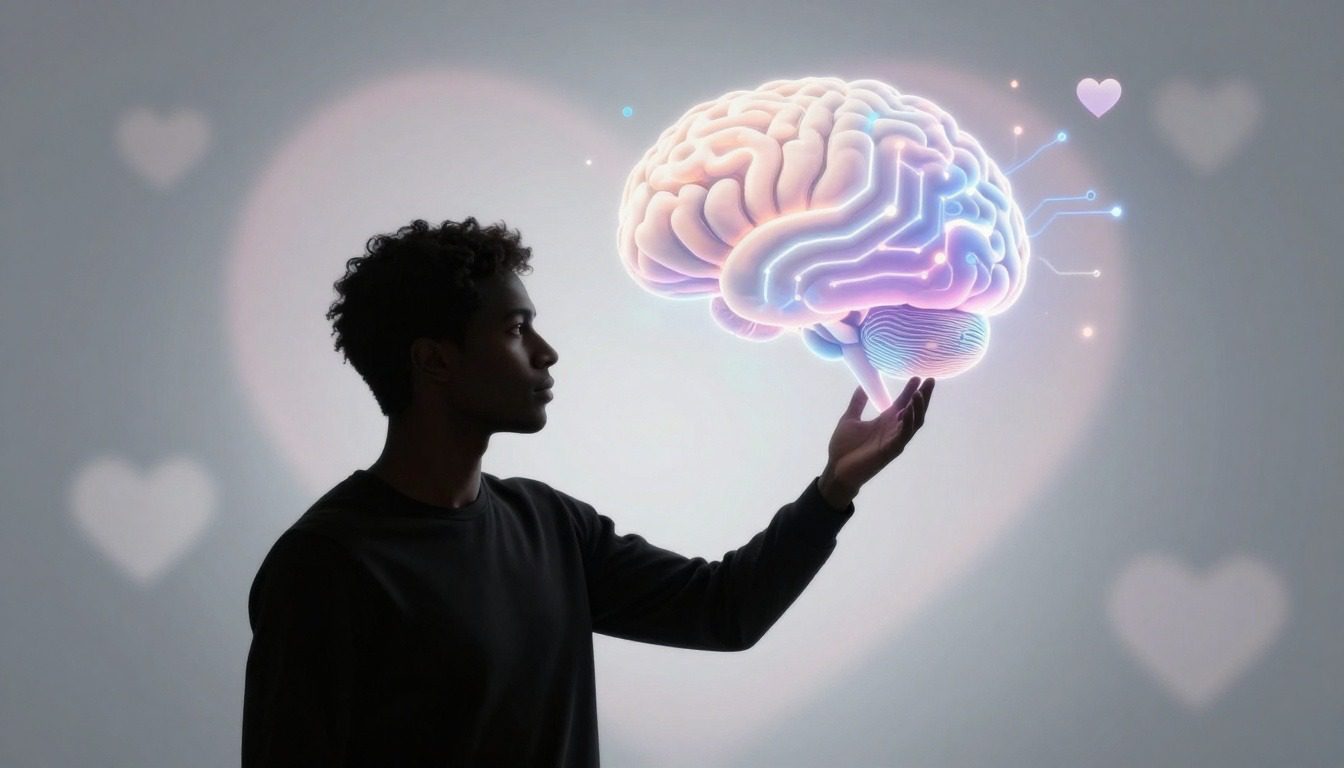
What if I told you the way narcissists “love” can work a lot like ChatGPT?
It feels like love bombing, where someone finally sees you, gets you, and matches you in a way that feels almost unreal. You say something, they respond perfectly. You feel met. You feel safe. You feel chosen. And then later, when things start to crack, you can’t understand why your body still reaches for them, even when your mind knows better.
That’s the illusion of connection at the heart of narcissistic abuse. It’s powerful, it’s convincing, and for many of us, it’s been mistaken for love.
https://www.youtube.com/watch?v=_X8lLP6Y6Mc
The shocking similarity between narcissists and ChatGPT
Here’s the parallel I want you to hold gently in your mind.
ChatGPT can respond in a way that feels personal, comforting, and incredibly “accurate,” but it isn’t emotionally connected. It’s predicting what fits the pattern. It mirrors your language, tracks your cues, and offers the output most likely to land.
With narcissists, the surface can look the same.
They mirror your words, your tone, your values, your humor, your wounds. They notice what lights you up and what scares you. Then they use that information to shape a response full of fake empathy that keeps you attached.
Your brain experiences it as connection. Your nervous system experiences it as safety. But underneath, it’s often not bonding; it’s manipulation tactics. That’s the idealization phase, precision mirroring at its core.
That’s why you can see red flags and still feel pulled toward the illusion.
Why this feels so real in your body
If you’re trying to make sense of the early stage, you’re not alone. Many people describe:
- An uncanny energy match like love bombing, as if they “got” you instantly.
- Feeling read better than anyone ever has.
- Feeling deeply seen (even if it was only sometimes, especially with a narcissistic parent).
Your body responded to something real, it just wasn’t love.
It was precision mirroring, and your brain is built to treat that as a sign of safety.
Who I am, and why I talk about brain science and emotional abuse
My name is Christina. On Common Ego, I focus on the psychology and neuroscience behind narcissistic abuse, healing, and the messy middle in between.
If you’ve been through a relationship like this, I already know something about your internal world. It’s been a roller coaster. Even after you “figure it out,” recovery in the messy middle can still leave you feeling stuck in the pull.
There’s a reason for that, and it isn’t because you lack self-worth or you’re weak or naive.
That first electric feeling (and why it wasn’t your imagination)
I want you to remember the beginning, if you can. The moment this person entered your life (or the moments you got in childhood, if this was a parent).
It often felt effortless. Like they could match you so perfectly it was almost spooky. Like they could track your mood, reflect your energy, and engage in future faking by saying exactly what you needed to hear about your future together.
That love bombing wasn’t your imagination. Your body was responding to something measurable in the brain.
Mirror neurons: why being mirrored feels like being loved
When someone mirrors us with a high level of accuracy, it activates a system in the brain that helps us feel what other people feel. These are often called mirror neurons.
I think of them as empathy antennas.
They tend to fire when we see someone reflect our:
- Facial expressions
- Tone of voice
- Emotion
- Energy and posture
Your brain interprets this mirroring as validation, signaling “This person is safe, and they get me.”
A quick clarification on how mirror neurons “mirror”
They aren’t called “mirror” neurons because they only respond when someone mirrors you.
They’re called mirror neurons because the same neurons tend to fire in two people at the same time. Someone smiles, their system lights up, and your system lights up too. That shared firing helps create emotional resonance.
This is part of why you can feel someone’s emotion just by being around them.
The dangerous part: mirror neurons are trainable
Here’s where simulated connection becomes a real problem.
Mirror neurons don’t fire alone. They sync with other networks in the brain, especially systems tied to dopamine (reward, pleasure, motivation) and oxytocin (bonding, trust).
So when someone engages in emotional manipulation by mirroring you in just the right way, your empathy system and your reward system can light up together. Over time, your brain builds a trauma bonding shortcut:
This person = safety
This person = love
This person = home
You’ve heard the phrase “neurons that fire together wire together,” and this is one of the clearest examples of it.
It’s like walking the same path through a forest every day. Eventually, the path becomes automatic, even if it leads somewhere unsafe.
Narcissists and empathy: what’s different in their brain
Now we get to the part that clears up so much confusion.
Research suggests that people with high narcissistic traits (especially those with narcissistic personality disorder) can show different patterns of activation in brain areas linked to empathy. That doesn’t mean they can’t read you. It means their lack of empathy, the kind you need for mutual connection, often isn’t operating the same way.
Their mirror neuron systems are not “dead,” but they can be tuned toward different goals, like reward, power, and dominance.
Cognitive empathy vs. affective empathy
This distinction changes everything:
Type of empathyWhat it meansWhat you often see in narcissistsCognitive empathyReading emotions accuratelyOften highAffective empathyFeeling emotions with youOften low
So yes, many narcissists can clock your emotion in seconds. They can predict your reaction. They can spot your soft spots. They can mirror you convincingly.
But that doesn’t automatically mean they feel with you, care with you, or connect with you.
Mirroring as a strategy, not a bond
When a narcissist mirrors your tone, your body language, or your feelings, it can look identical to real connection.
But the engine behind it, driven by manipulation tactics, can be completely different.
I’ll say it plainly: you’re bonding, they’re strategizing.
You’re having a real emotional experience. Their focus is often on recognition and control. They’re tracking cues and adjusting their behavior to keep you invested and feed their narcissistic supply.
That’s why I compare it to ChatGPT. The output can feel personal, but it’s still a prediction based on patterns.
The ChatGPT parallel (and why it matters)
People joke about naming their AI. “Chad.” “Martha.” Whatever. And I’m not here to shame anyone for using tools that help them think and feel.
I just want you to see the mechanism.
Simulated connection hooks us through a mix of:
- Mirroring
- Predictability
- Constant validation
That combination can be soothing, especially if your nervous system is exhausted. But it’s still not the same as mutual human attachment.
So if your brain got hooked on a narcissist’s imitation of intimacy during narcissistic abuse, it makes sense that other forms of imitation can feel compelling too.
The narcissist’s “program”: warmth, coldness, repeat
Here’s the part you probably know in your bones.
It starts electric. They mirror you perfectly. The connection feels effortless. You finally exhale.
Then without warning, it shifts.
Warmth turns to devaluation. Their energy changes. You’re left scanning yourself amid the gaslighting, wondering what you did wrong, and how to get back to the version of them that felt so good.
Then they come back. And the cycle repeats.
This isn’t random. It’s conditioning.
Intermittent reinforcement: the conditioning that keeps you hooked
This push-pull pattern is a psychological process called intermittent reinforcement.
It means the “reward” (affection, validation, attention, relief) shows up at random intervals instead of consistently.
Unpredictable rewards create stronger attachment than steady rewards. It’s the same mechanism behind:
- Slot machines
- Refreshing your phone to see if someone texted
- Waiting for the next hit of relief after tension, like the silent treatment
With narcissists, the reward can shrink over time. After pulling away, they often engage in hoovering to draw you back with something tiny, like a smile, a nod, or a text that doesn’t tear you down.
But your brain still responds, because the pathway is already carved.
Inside the narcissist’s nervous system: bonding through dominance
For most people, empathy is what keeps relationships alive.
I see your joy, I feel warm with you.
I see your pain, I feel moved to comfort you.
Connection feels good because it’s safe.
But in narcissistic dynamics, the “high” can come from somewhere else.
When their mirror neuron and reward systems are tuned toward dominance and self-relevance, they can feel most alive when they feel powerful.
So when you’re angry, sad, or scared, their lack of empathy means it doesn’t always move them toward repair. It can move them toward stimulation, because your reaction confirms they still have influence.
That spike of power, the high they get from dominance in psychological abuse, can hit their dopamine system the way love once hit yours.
This is why it feels like an emotional seesaw:
- One nervous system bonds through vulnerability and repair.
- The other bonds through control and reaction.
You’re seeking safety. They’re often seeking stimulation.
Why chaos can feel like love (especially if it started early)
If you grew up around intermittent reinforcement, these early patterns can distort your self-worth and prime your brain to link chaos with love.
Over time, the neurons that fired during affection and the neurons that fired during anxiety started wiring together. Love and fear ended up in the same circuit.
That’s why someone can feel like “home” and “danger” at the same time.
If you want a deeper look at why certain people get pulled into these dynamics, I wrote about the pattern in narcissist-empath attraction dynamics.
Predictive processing: why your survival brain overrode your logic
Your brain is constantly scanning for patterns. This is often described as predictive processing.
When something matches what your brain expects, it flags it as familiar. And familiar often gets labeled “safe,” even when it’s harmful.
Narcissists exploit that through emotional manipulation.
Their mirroring gives your brain a pattern it recognizes. So even when your logical mind sees the red flags, your survival brain says, “This feels familiar. Stay close.”
This is why “knowing better” often isn’t enough.
Knowledge lives in the prefrontal cortex, the part that analyzes and plans. Safety lives in the nervous system. When those two disagree, the nervous system usually wins.
The amygdala never fully relaxes in narcissistic relationships
In a volatile relationship marked by psychological abuse, your amygdala (the brain’s threat detector) stays on alert. You’re always waiting for the other shoe to drop.
So your body goes into survival attachment mode.
That can sound odd if you’ve never heard it framed this way, but it’s simple: your nervous system reaches for whatever brings regulation, not whatever brings truth.
You weren’t ignoring red flags because you didn’t care. Your body was trying to stabilize itself inside instability.
If you want support tracking patterns and reality-checking the chaos, the free narcissistic abuse checklist can help you name what happened without minimizing it, rebuilding your self-worth.
Love and fear fused: why “just leaving” can feel impossible
When love and fear fuse in trauma bonding, you don’t feel like you’re choosing between healthy and unhealthy.
You feel like you’re choosing between familiar and unfamiliar.
And if that ball of love and fear is what your nervous system knows, it will reach for it automatically. That isn’t weakness. That’s neurobiology.
Awareness matters, but awareness alone doesn’t break the bond. Your body still remembers the chemistry.
Breaking the simulated bond (rewiring starts here)
Walking away from a narcissist isn’t just ending contact.
It can feel like the start of recovery, breaking a program your nervous system was trained to obey.
The good news is that patterns can change. Your brain can update what it associates with safety. You can retrain your system by setting boundaries to crave calm instead of chaos, and real empathy instead of imitation.
This is the work I do with clients, including practical tools like the gray rock method, and it’s why I built professional narcissistic abuse coaching services. The goal is not to “think positive.” The goal is to change what your body expects from connection.
If you’re in the place where you know you need to break free, but the emotional pull still feels stronger than your logic, my Breakthrough Intensive healing program was created for that exact stuck point.
How narcissists hijack your reality (not just your emotions)
Once you understand the emotional hook, the next layer is how narcissists use gaslighting to shape perception itself.
One common tool is getting you to carry their inner world for them, especially through defense mechanisms like projection. If you’ve ever experienced their blame-shifting, accused of the very thing they were doing, or pushed until you reacted and then got painted as the problem, you’ve seen this up close.
I unpack that pattern in narcissist projection and the hidden defense mechanism.
Supporting research (for the part of you that needs receipts)
If you’re the kind of person who feels steadier when there’s research behind the concepts, I get it. Here are some of the studies I referenced in my own learning:
- “Can neuroscience help to understand narcissism? A systematic review of an emerging field.” (reduced mirroring of emotions in people with narcissistic traits)
- “A neural model of mechanisms of empathy deficits in narcissism.” (different activation in brain regions tied to empathy)
- “Gray matter abnormalities in patients with narcissistic personality disorder” (structural differences in regions linked with emotional empathy)
- “Mirror Neurons, Empathy, and the Other.” (overview of mirror-neuron systems and empathy)
Two next steps if you’re trying to find your footing
If you’re not sure where you are in your healing, start simple. I made a quick, free tool for that: the recovery clarity quiz.
If you’re looking for licensed therapy support (especially trauma and abuse focused to address common struggles like social isolation and goals such as setting boundaries), I’ve also partnered with BetterHelp. You can use BetterHelp for abuse and trauma therapy support for a discount on your first month (I do receive commissions on referrals).
Key takeaways to hold onto
- Narcissists can simulate love through love bombing and mirroring, often cycling into devaluation and discard, even when connection is one-sided.
- Your mirror neurons create a real bond when someone reflects you accurately.
- Many narcissists show a split between cognitive empathy (reading you) and affective empathy (feeling with you).
- Intermittent reinforcement, such as sporadic validation, creates attachment through unpredictability, not safety.
- Predictive processing makes familiar patterns feel safe, even when they’re harmful.
- Your nervous system chased regulation, not fantasy, and that’s why logic didn’t “fix it.”
- Rewiring is possible, but it has to include the body, not just the mind.
Conclusion
If a narcissist’s love felt intoxicating and impossible to let go of, that doesn’t mean it was real love, and it doesn’t mean you’re broken. It means your brain and nervous system did what they were designed to do: attach to what looked like safety. The work now is teaching your system the difference between intensity, such as emotional blackmail and triangulation, and intimacy; between mirroring and healthy love. You can retrain your body to recognize real connection, and when you do, the illusion of emotional manipulation stops feeling like home.