



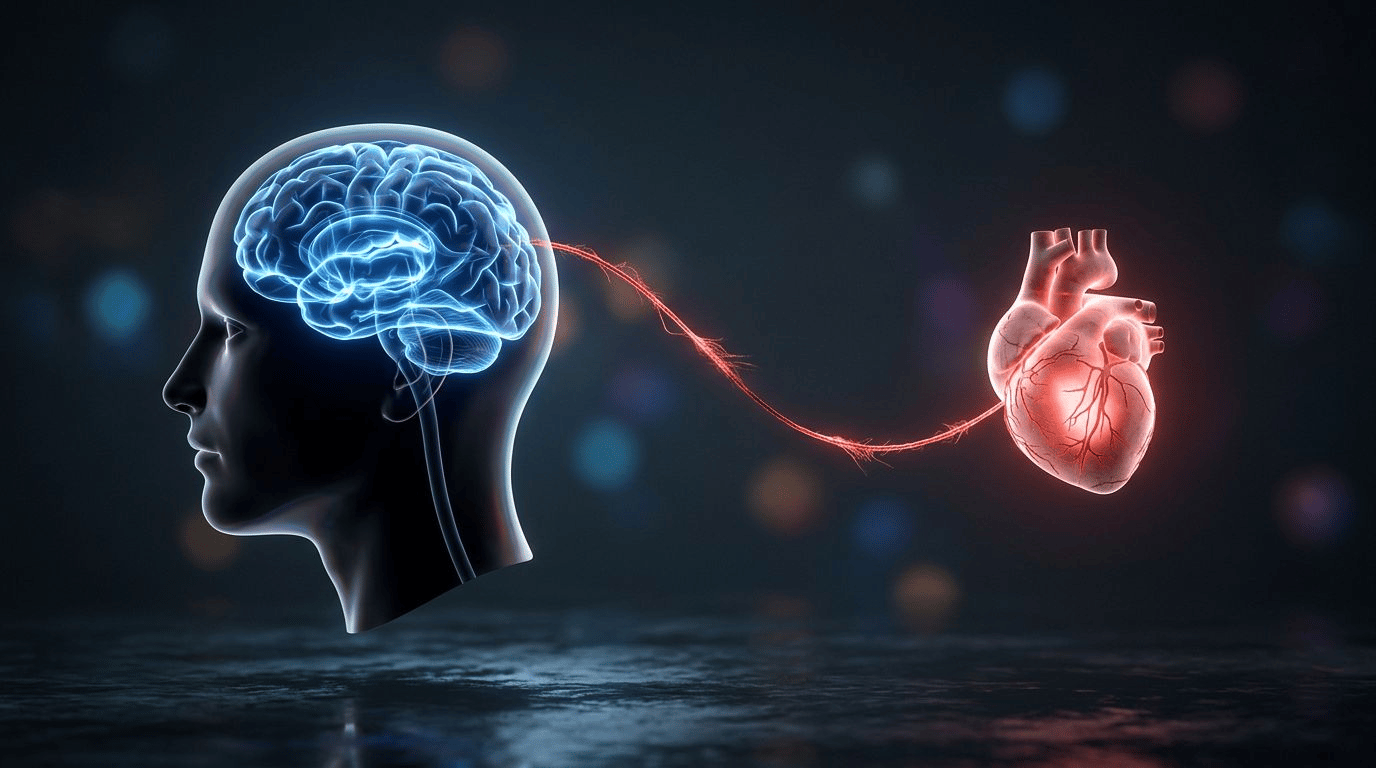
If you can’t stop thinking about someone who keeps hurting you, that doesn’t automatically mean it’s love. A trauma bond can feel intense, consuming, and impossible to walk away from, while your brain is reacting more like it’s chasing relief than building a safe connection.
That distinction matters. Once you stop blaming your heart and start looking at your nervous system, the whole picture changes, and recovery starts to make more sense.
Your brain can mistake toxic attachment for love
I want you to hear this clearly, because it changes everything: obsession is not proof of love.
Brain scan research has found that when people look at photos of someone they have a trauma bond with, the neural activity looks a lot like what shows up in people craving a drug. In the video, Christina compares it to cocaine, and that’s the point. Your brain can get pulled into the same kind of reward loop with a person that it does with a substance.
Once that happens, the relationship often follows the same three-stage cycle as addiction:
- You crave them.
- You use the connection for relief, contact, attention, affection, any sign that they’re “back.”
- You crash into withdrawal when they pull away again.
And from the inside, that cycle can feel exactly like love. That’s what makes it so confusing.
If you’ve ever thought, “Why does this feel so strong if it’s so bad for me?”, the answer may be that your survival system has attached meaning to the chaos. Your brain isn’t reading stability as important. It’s reading intensity as important. So the very thing that’s hurting you starts to feel like the thing you need most.
Intermittent reinforcement is what gets you hooked
The pattern that creates trauma bonds is called intermittent reinforcement. It means the reward is unpredictable. You get affection, then distance. Kindness, then cruelty. Closeness, then coldness.
Research Christina references from Emory University points to something people in toxic relationships feel every day: inconsistent rewards create stronger attachment patterns than steady positive treatment. A healthy person who treats you well all the time doesn’t send your brain into a panic-reward-panic loop. A toxic person who gives you rare moments of warmth does.
You don’t get addicted to someone who treats you well. You get addicted to someone who treats you badly most of the time, then gives you enough kindness to keep you hoping.
That’s why a stable relationship can feel “less intense,” while a damaging one feels impossible to leave. It isn’t because the toxic bond is deeper. It’s because your reward system has been trained to chase relief.
This is also why “just leave” doesn’t land. Gambling research has shown that intermittent reward creates a craving that often gets stronger when the reward disappears. Christina uses the image of a lab rat pressing the lever over and over, even after the reward stops. That same mechanism shows up here. When the connection is removed, your brain doesn’t calm down right away. It ramps up. It tells you to try harder.
So no, lack of contact doesn’t always make you want them less at first. Sometimes it makes you want them more, because withdrawal is doing exactly what withdrawal does.
Withdrawal feels like missing them, and that’s why it’s so confusing
One of the hardest parts of trauma bonding is that withdrawal doesn’t always feel like addiction. It often feels like heartbreak, grief, and longing.
You may feel chest tightness, trouble sleeping, loss of appetite, brain fog, and an almost constant urge to reach out. Most people read those symptoms as emotional truth. “If I feel this bad without them, they must matter that much.” But that interpretation misses what’s happening in the body.
Christina points out that trauma bond withdrawal can show the same physiological markers seen in mourning, including cortisol spikes and dopamine crashes. So yes, it can feel like grief. But it isn’t the same as grieving someone who loved you in a healthy way.
With real grief, there is pain and longing, but there usually isn’t the same obsessive belief that reunion will fix everything. With a trauma bond, there is pain plus the biological drive to get back to the source of relief. That’s the hook. You aren’t only missing them. You’re craving the thing your nervous system learned to use for regulation.
That’s why people say, “I know they’re bad for me, but I can’t stop thinking about them.” They’re describing addiction symptoms in the language of love.
And staying away can feel brutal, because every day without contact feels like choosing pain, even though going back would only strengthen the cycle that caused the pain in the first place.
A trauma bond slowly shrinks your sense of self
Trauma bonds don’t only keep you attached. Over time, they can make your whole life smaller.
You may stop talking to friends who seem worried about the relationship, not always because anyone ordered you to, but because it’s easier than defending something you’re already starting to question. Interests fade. Opinions get quieter. Parts of your personality go offline because conflict feels risky, and conflict threatens access to the reward.
That shift can be so gradual that it looks like commitment. You may tell yourself you’re becoming more understanding, more accommodating, more focused on the relationship. But healthy love doesn’t require you to disappear.
A safe relationship usually expands your sense of self. There is room for your friends, your interests, your thoughts, and your limits. A trauma bond tends to do the opposite. You get smaller so the other person can stay bigger. You become uncertain so they can feel right. You become dependent so they can stay in control.
A quick reality check can help:
| In healthy love | In addictive attachment |
|---|---|
| You want good things for them, even if it doesn’t include you | You need access to them to feel okay |
| You trust them to handle their emotions | You feel responsible for fixing their emotional state |
| Your identity stays intact | Your world starts revolving around their approval |
Love expands. Addiction contracts.
And if you notice that your independence seems to make the connection less secure, pay attention to that. Your nervous system may have learned that dependence keeps the bond alive, while confidence or distance threatens it.
Recovery starts when you treat this like addiction
The most relieving part of Christina’s message is this: your capacity for love isn’t broken. Your attachment system is doing what attachment systems do. It’s responding to cues. The problem is that the cues have been distorted.
When you see trauma bonding as an addiction issue, the next step gets clearer. The answer isn’t better communication. It isn’t more empathy for someone who keeps destabilizing you. The answer is detox.
That means complete separation for a period of time, so your reward system has a chance to recalibrate. No moderation. No “a little contact.” No checking in to see if they’ve changed. With intermittent reinforcement, even a small amount of access can restart the whole cycle.
It’s also important to reframe the pain. The obsessive thoughts, the urge to contact them, the physical ache, none of that means you made the wrong decision. It usually means withdrawal has begun.
If you’re trying to figure out what’s keeping you stuck, the free trauma bond recovery quiz can help you put language around the pattern. If you want more direct support, there’s also 1-on-1 coaching with Christina, a program built to help you break the trauma bond and move on, and the option to get matched with a licensed therapist through BetterHelp.
The pain is real. But once you stop calling it love when it’s withdrawal, it becomes something you can treat.
Final thoughts
If leaving someone feels like coming off a drug, that doesn’t mean the relationship was meant to be. It often means your brain got trained into a pattern that confused chaos with connection.
The strongest takeaway is simple: pain after separation is not proof of love. A lot of the time, it’s proof that your nervous system is detoxing from a bond that was hurting you. And that means healing is possible.